If you’ve been researching ways to improve your home’s or business’s air quality, you’ve likely come across UV light for HVAC systems. But what exactly does a UV light in your HVAC do? Does it actually work, and is it worth the cost?
At BTAC, Lubbock’s trusted HVAC experts since 1972, we install UV systems in both residential and commercial HVAC setups across the South Plains of Texas every day. This guide answers the most common questions we hear from homeowners and business owners so you can make a confident, informed decision.
What Is a UV Light for an HVAC System?
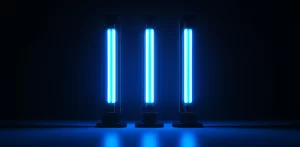
A UV light for an HVAC system is a device that emits UV-C light, a specific, short-wavelength band of ultraviolet radiation with proven germicidal properties. UV-C light disrupts the DNA and RNA of microorganisms, rendering bacteria, viruses, mold spores, and other pathogens unable to reproduce or cause harm.
There are two main types of HVAC UV light installations:
- Coil-sterilization lights (stick lights): Mounted near the evaporator coil inside the air handler, these lights operate continuously to help prevent mold and microbial growth on the coil surface. This buildup is one of the most common causes of HVAC efficiency loss and unpleasant odors.
- Air-sterilization lights (air purifier lights): Installed in the return air duct, these cycle on when the system runs and disinfect air as it flows through, neutralizing airborne pathogens before they circulate through your home or building.
Many installations utilize both types in combination for maximum protection. Our indoor air quality specialists can assess your system and recommend the right configuration for your needs.
How Does UV-C Light Work in an HVAC System?
The science is straightforward. When a microorganism, whether a mold spore, bacteria, or virus, passes through or is exposed to UV-C light in an HVAC system, the radiation penetrates its cell wall and damages its genetic material. The organism can no longer replicate, effectively neutralizing the threat without any chemicals or byproducts.
UV-C HVAC systems are most effective when the light source has sufficient exposure time and intensity. This is why placement matters: a properly positioned air handler UV light system ensures airborne contaminants are exposed long enough to be neutralized as air moves through the duct at normal fan speeds.
Key factors that determine effectiveness:
- Bulb intensity (microwatt output): Higher-output bulbs treat air more quickly and thoroughly.
- Placement: Proximity to the evaporator coil and correct positioning in the duct ensure maximum exposure.
- System airflow rate: Higher CFM means shorter exposure time per pass; the right bulb selection accounts for this.
- Bulb age: UV-C output degrades over time. Replace bulbs every 9–12 months for consistent effectiveness.
UV Light in HVAC Effectiveness: What the Research Shows
UV light in HVAC effectiveness is one of the most common questions we get, and the evidence is solid. Multiple peer-reviewed studies confirm that properly installed UV-C HVAC systems deliver measurable, real-world results:
- A study published in the journal The Lancet found that upper-room UV-C germicidal irradiation reduced airborne transmission of tuberculosis by over 70%.
- Research from Duke University Medical Center demonstrated that UV-C systems reduced hospital room bacterial contamination by up to 97.7%.
- The EPA confirms that UV-C light effectively inactivates mold, bacteria, and many viruses, including coronaviruses, when exposure levels are sufficient.
- HVAC-specific studies show that UV coil sterilization maintains evaporator coil cleanliness, recovering up to 35% of lost airflow efficiency in systems with significant biofilm buildup.
Bottom line: UV light for HVAC systems works, provided the system is correctly sized, properly installed, and maintained with regular bulb replacement. It is not a replacement for air filters, but it is a powerful complement to them. Our residential HVAC team can evaluate whether a UV upgrade makes sense for your existing setup.
HVAC UV Light Benefits: 6 Reasons to Install One
1. Dramatically Better Indoor Air Quality
Indoor air can be two to five times more polluted than outdoor air, according to the EPA. UV light for air conditioning systems targets the microscopic contaminants that standard air filters miss: mold spores, bacteria, viruses, and volatile organic compounds (VOCs). For households or businesses in Lubbock where dust and allergens are already a challenge, a UV light in your HVAC system provides a meaningful layer of protection that filters alone can’t deliver.
2. Reduced HVAC Energy Bills (Up to 25% Savings)
One of the most financially compelling HVAC UV light benefits is improved system efficiency. Mold and biofilm buildup on evaporator coils acts like insulation, forcing your system to work harder to achieve the same heat transfer. Studies show clean coils can reduce HVAC energy consumption by up to 25%. A UV light installation near your air handler coil keeps coils clean continuously, maintaining peak efficiency without additional manual cleaning.
3. Reduced Risk of Illness (Including COVID-19)
UV-C light has been shown to inactivate a wide range of airborne pathogens, including influenza, rhinovirus, and coronaviruses like COVID-19. While no single measure eliminates all risk, HVAC UV light systems reduce the concentration of airborne pathogens circulating through your space, lowering transmission risk for respiratory illnesses. This is especially valuable in commercial settings, offices, restaurants, healthcare facilities, and schools, where many people share the same circulated air.
4. Mold and Mildew Prevention
The evaporator coil in your air conditioning system sits in a cool, moist environment, exactly where mold loves to grow. Once mold colonizes your coil or ductwork, it circulates spores throughout your space every time the system runs. Installing a UV light in your HVAC system eliminates this problem at the source, continuously sterilizing the coil surface so mold never gets a foothold. This is particularly important in Texas summers when the system runs almost constantly, and moisture levels are high.
5. Elimination of HVAC Odors
Musty, stale, or unpleasant odors coming from your vents are almost always caused by microbial growth in the air handler or ductwork. UV lights in HVAC systems neutralize the odor-causing bacteria and mold at the source, not just masking the smell but eliminating the microorganisms responsible. Customers consistently report noticeably fresher air within days of UV installation.
6. Extended HVAC System Lifespan
A clean system is a long-lasting system. By keeping evaporator coils free of biofilm and reducing microbial-driven corrosion of internal components, HVAC UV light systems reduce wear on your equipment. Combined with regular HVAC maintenance agreements, UV lights help protect your investment and delay costly system replacements.
How Much Does It Cost to Install a UV Light in an HVAC System?
The cost to install a UV light in an HVAC system varies based on the type of light, the number of units, and your specific system configuration. Here’s what most Lubbock homeowners and businesses can expect:
- Single coil-sterilization UV light: $150–$350 for the unit, plus $100–$200 for professional installation. Total: $250–$550.
- Air-sterilization UV system (duct-mounted): $200–$500 for the unit, plus installation. Total: $300–$700.
- Dual UV system (coil + air sterilization): $400–$800 installed — the most comprehensive option and the one BTAC typically recommends for maximum effectiveness.
- Replacement bulbs: $20–$60 per bulb, replaced annually.
So, how much to install a UV light in an HVAC system really comes down to your setup. The investment typically pays for itself within 1–2 years through energy savings alone, before factoring in reduced maintenance costs and health benefits.
Operating costs are minimal: most UV light HVAC systems consume only 15–30 watts, comparable to a standard light bulb. And the question we often hear is operating an HVAC UV light system costly? The answer is no. Annual operating costs are typically under $30, making this one of the highest-ROI upgrades available for your HVAC system.
Ready to get an accurate quote for your home or business? Contact BTAC for a UV light installation estimate. We offer transparent, upfront pricing with no surprises.
UV Light HVAC Installation for Commercial Buildings
UV light HVAC installation for commercial facilities follows the same principles as residential installation, but at a larger scale. For multi-zone commercial systems, rooftop units, or large air handlers, multiple UV systems are typically deployed to ensure comprehensive coverage.
Commercial applications where UV HVAC systems deliver exceptional value:
- Restaurants and commercial kitchens: Grease-laden air accelerates microbial growth in ducts and coils. UV systems significantly reduce mold buildup and odors. Pair with our commercial kitchen equipment services for a complete solution.
- Medical and dental offices: Reducing airborne pathogen transmission is critical. UV systems complement HEPA filtration to create clinically safer air.
- Schools and office buildings: Shared air means shared illness. UV systems reduce absenteeism by lowering airborne pathogen loads.
- Retail and hospitality: Fresher air creates a better customer experience and protects your commercial air conditioning investment.
BTAC’s commercial HVAC services include professional UV light installation, system assessment, and ongoing maintenance for businesses of all sizes across the South Plains.
What to Expect During HVAC UV Light Installation
Professional HVAC UV light installation by a certified technician is straightforward and typically completed in 1–2 hours without disrupting your system for longer than necessary. Here’s what the process looks like with BTAC:
- System assessment: Our technician evaluates your air handler, ductwork layout, and airflow rates to determine the best UV light type and placement for your system.
- Coil inspection: If significant mold or biofilm buildup is present, we clean the coil before installation to give the UV system a clean starting point.
- UV light mounting: The light is secured in the air handler or duct using the appropriate bracket and sealed to prevent UV exposure outside the system.
- Electrical connection: The system is wired to your HVAC control board or a dedicated circuit, depending on the unit type.
- Testing and verification: We run the system and verify proper UV output, confirm the light cycles correctly with your HVAC, and walk you through bulb replacement timing.
Proper installation is critical; an incorrectly positioned UV light can reduce effectiveness by 50% or more. Always use a certified HVAC technician for UV light installation. BTAC holds the Texas HVAC License TACLA00112807C, and our technicians are NATE-certified.
Who Should Install a UV Light in Their HVAC System?
While almost any system can benefit, UV lights deliver the most value for:
- Allergy and asthma sufferers: Fewer airborne triggers mean fewer symptoms. Combined with our indoor air quality solutions, UV lights create a significantly healthier breathing environment.
- Homes with pets: Pet dander, hair, and the bacteria they carry are dramatically reduced.
- Older HVAC systems: Systems that have run for years without coil cleaning often have significant biofilm buildup. UV lights halt further growth and begin restoring efficiency.
- Humid climates or high-use systems: In West Texas summers, where your AC runs nearly 24/7, moisture accumulation on coils is constant. UV systems provide continuous protection.
- Commercial facilities with high occupancy: Schools, offices, restaurants, any space where people share circulated air benefits significantly.
- Post-COVID-conscious businesses: Demonstrating proactive air quality measures builds customer and employee confidence.