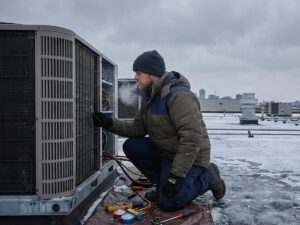
When a commercial HVAC system fails in winter, the problem is rarely just comfort. For businesses, it can mean lost productivity, unhappy customers, safety concerns, and unplanned downtime.
January is when weaknesses show up. Systems are working harder, schedules are tighter after the holidays, and even a short outage can disrupt operations. In Lubbock, where winter weather can swing quickly, commercial heating failures often follow predictable patterns.
Knowing what to watch for helps business owners act before a small issue becomes an emergency.
Heating Systems Under Constant Load
Commercial HVAC systems are designed for durability, but sustained winter demand exposes problems that may have gone unnoticed during milder weather.
Common stress-related failures include worn components, overheating controls, and systems that cycle too frequently. These issues often show up as inconsistent temperatures across a building or systems that struggle to reach set points.
In many cases, the system is still running, but inefficiently. That’s often the most expensive stage to ignore.
Inconsistent Heating Across the Building
When some areas are warm and others remain cold, the issue is rarely the thermostat alone. Commercial properties often deal with zoning imbalances, airflow restrictions, or failing dampers.
Employees notice first. Customers follow soon after.
These problems tend to worsen during peak winter usage, especially in buildings with older ductwork or multiple expansions over time.
Control and Electrical Failures
Modern commercial HVAC systems rely heavily on control boards, sensors, and electrical components. Power fluctuations, worn connections, or aging controls can shut down part or all of the system without warning.
Warning signs include:
- Systems that reset unexpectedly
- Units that fail to respond to thermostat adjustments
- Repeated breaker trips
Electrical issues often escalate quickly and should be addressed before they result in full system shutdowns.
Deferred Maintenance Catching Up
Many winter HVAC emergencies trace back to postponed maintenance. Dirty coils, clogged filters, and neglected inspections reduce efficiency and shorten equipment life.
January is when deferred maintenance usually becomes visible, especially in high-traffic commercial spaces like offices, retail, and service facilities.
Preventive service isn’t just about avoiding breakdowns. It’s about keeping operating costs predictable.
When a Commercial HVAC Issue Becomes Urgent
Some situations require immediate attention. Business owners should call for commercial HVAC service right away if:
- Heating fails during business hours
- Temperatures drop below safe working conditions
- Systems repeatedly shut down or fail to restart
- Employees or customers are affected
Delays can compound costs through lost productivity, emergency repairs, or damage to equipment.
Commercial HVAC Support for Lubbock Businesses
Commercial heating systems require specialized expertise. Diagnosing issues accurately the first time saves time, money, and disruption.
BTAC provides commercial HVAC service throughout Lubbock, working with businesses that need reliable systems, clear communication, and efficient solutions during critical winter months.
Keep Your Business Running, Even When Winter Pushes Back
January is not the time to gamble on a struggling HVAC system. Addressing small issues early helps prevent emergency shutdowns when schedules are tight and options are limited. To schedule commercial HVAC service, call BTAC at 806-203-6131 or use Schedule Service through our secure online portal. Early morning and after-hours appointments tend to fill quickly during winter cold snaps.
With proactive attention and experienced technicians on your side, your HVAC system can support your business instead of interrupting it, no matter how unpredictable the season becomes.